Trendler & İlham · Goril Radar’da yayın:
More of Everything: Living in the Age of Maxxing
Yazar: Ajans Goril
Kaynak yayın tarihi:
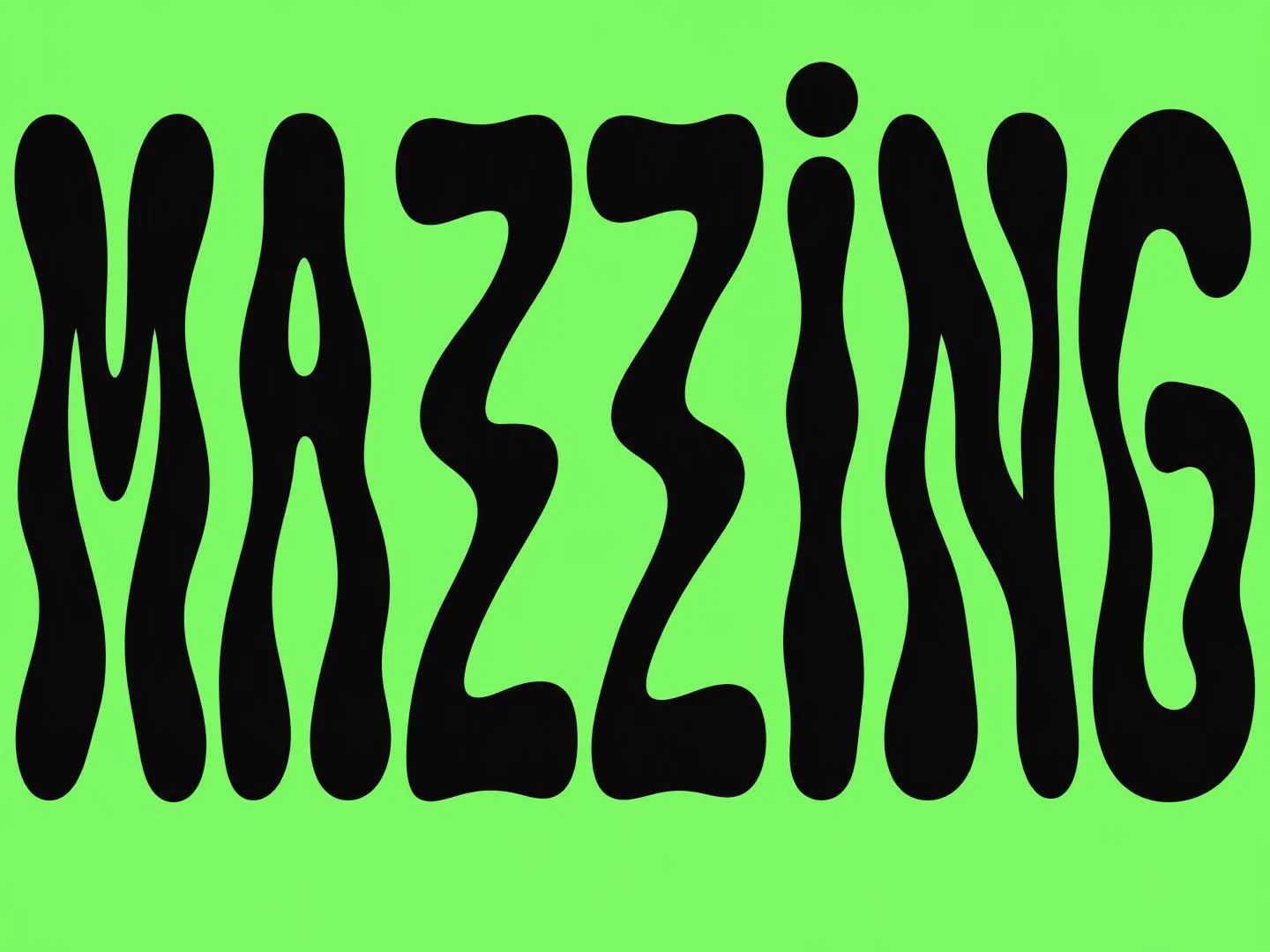
When a word is chosen as Word of the Year, it does not always announce something brand new; sometimes it merely gives a name to the atmosphere we already inhabit. On 25 October 2026, Dictionary.com chose 'maxxing' as that name: pushing a pursuit to its absolute limit, optimising a specific facet of life as thoroughly as possible. Body, money, sleep, appearance, work—once the same suffix is appended, they all turn into projects awaiting completion. Yet the central concern of this article is not a dictionary announcement. It is an older, quieter, and far more human question: as we maximise everything, how much closer do we actually get to one another? 2
The Guardian's community-maxxing article of 25 August 2026 unpacks this question from within offline life. Book clubs, crafting circles, nature walks, and running clubs; meeting in the same place again, being a good neighbour, volunteering regularly. The pursuit here is not about viewing more content, but feeling a sense of belonging to a place and to each other. A different rhythm is established against the endless stream of doomscrolling: not simply switching off the screen once, but turning up to the gathering again the following week. 1
We cannot treat this narrative as proof that an entire generation has collectively withdrawn from the internet. The Guardian's Pass notes piece is a cultural framework illustrating a trend through various examples and other reports; it is not an experiment measuring generational behavioural change. Even so, its choice of word gives pause for thought. Why does a desire to compete less and connect more still speak the language of reaching the absolute maximum?
Bağlantı değil, tekrar eden karşılaşma
Connecting in a digital environment and sustaining a relationship may look similar, but they are not the same endeavour. Seeing someone's post might mean keeping up with their life; being there for them on a difficult day demands a different kind of effort. The Guardian's definition of community-maxxing hinges on seeking regular, in-person connections around shared interests. The crucial word is not merely in-person, but regular. Closeness is rarely born of an extraordinary night out, but from the repetition of an ordinary day. 1
Consider a book club. This is not a case study drawn from the source, but an everyday example: after sitting in the same chair a few times, we learn who objects to every sentence, and who pauses to reflect before speaking. The value of the discussion spills far beyond the tally of books finished. Something similar can happen in a running group; matching someone else's pace is a different skill from beating one's personal best. In a knitting group, a tangled skein does not cut conversation short—sometimes it starts one.
Gen Z'nin icadı olmayan bir ihtiyaç
In the Guardian's narrative, community extends beyond shared interests. Engaging with where we live, remaining open to unexpected encounters, borrowing a tool from a neighbour rather than buying one, chatting with the next table at a local café, and volunteering regularly all fall within the same framework. None of these are novel inventions. What is new is that these age-old forms of solidarity are becoming visible again through the vocabulary of digital culture. 1
The article also cites the example of an autistic young man attending the Boomtown festival alone who was welcomed in by another group. What matters in this scene is not the individual polishing his image to appear worthy of a community, but the group making room for him. Here lies the difference between belonging and personal branding: in one we present ourselves, while in the other we must be able to simply exist without putting on a presentation. Yet it would be a mistake to conclude from a single warm encounter that all festivals or entire generations are inherently inclusive. 1
Reading community-maxxing merely as a new hobby for lonely youths therefore sets too narrow a frame. The Guardian also notes examples of intergenerational co-living and intentional communities. The World Health Organization's 2025 Commission on Social Connection report similarly distinguishes between social isolation and loneliness: the former concerns a deficit of relationships or contact, while the latter stems from the distress caused by the gap between desired and actual relationships. Thus, simply stepping into a crowd does not resolve the issue. Social connection is far too reciprocal a matter to be left solely to a lonely person's decision to get out of the house. 3
İnsan, tamamlanmayan bir projeye dönüşünce
The appeal of the language of maxxing lies in offering a clear target to an ambiguous existence. Sleeping better, building strength, learning, or saving money are not problems in themselves. The trouble arises when 'better' continuously postpones feeling 'enough'. When a routine that worked yesterday is deemed outdated today, the sense of progress and the sense of inadequacy can grow in tandem. What is being discussed here is not a clinical diagnosis, but a cultural logic: viewing oneself as an endless project of maintenance and upgrades.
Dictionary.com charts the spread of the suffix from online forums to social media, noting how more playful derivatives have proliferated alongside usages like looksmaxxing. The same terminology can accommodate both earnest self-improvement efforts and satirical takes on that very pressure. It is therefore a mistake to reduce every use of maxxing to a single ideology. Joking around with friends is not the same behaviour as turning one's body into an inventory of flaws; yet both illustrate how familiar the compulsion to self-improve has become. 2
There is a fundamental difference between levelling up a video game character and bettering a real human being. In a game, the rules, scores, and win conditions are usually well-defined. In life, however, a gain in one area can easily mean a loss in another. Working more means seeing people less; attending more events might leave less time to rest. Fitting the whole of life into a single performance matrix requires translating entirely different values into the same metric. And in that translation, things get lost.
Tokenmaxxing: Daha çok üretmek mi, daha çok tüketmek mi?
Dictionary.com also includes 'tokenmaxxing' in the same family of words, linking it to using as much artificial intelligence at work as possible. The article presents corporate encouragement of AI adoption as one of the contexts behind the term's rise. From this, we cannot conclude that every workplace operates this way, or that any specific company evaluates employees by their token count. Nevertheless, the concept itself opens up a debate about the risk of a tool becoming an end in itself. 2
In large language models, a token is a unit measuring segments of processed text; on its own, it says nothing about the accuracy, usefulness, or originality of the work. Making more model calls does not prove that a better decision has been reached. Solving a task with fewer operations can sometimes be the superior design. The real question is less about how much AI we use than which problem we are solving, how we vet the output, and how much human time we actually save.
At this juncture, an unexpected parallel emerges between tokenmaxxing and community-maxxing. In one, processing volume can be mistaken for an outcome; in the other, the sheer number of social events takes its place. It is easy to claim you attended five clubs in a week; someone getting to know you, noticing your absence, and standing by you develops much more slowly. When we conflate the volume of consumption with the quality of a relationship, two ostensibly distinct spheres fall prey to the very same optimisation fallacy.
Wellness ekonomisi eksikliği nasıl paketler?
A self that constantly requires improvement is primed to generate an endless checklist of needs from a marketing standpoint. This assertion is not a claim about specific market valuations, but a critique of a business model. When sleep is presented as a score, rest as a technique, focus as a subscription, and togetherness as an event package, every idle moment of daily life can be monetised into a marketable solution. There is a distinct difference between a product being useful and an entire lifestyle being marketed as mandatory.
Maintaining this distinction is especially vital in the wellness sphere. Moving your body, eating well, or seeking support are hardly things to dismiss. Yet turning the desire for a healthy life into an unending consumerist test can turn self-care itself into a fresh source of anxiety. For someone who feels compelled each morning to prove they are using the right products, working for the exact right intervals, and resting in precisely the proper manner, relaxation begins to resemble a shift at work.
While community-maxxing holds the potential to step outside this economy, it is not automatically exempt from it. Book club memberships, running gear, or workshop fees can easily be sold as proxies for social intimacy. On the other hand, a paid event can also carve out space for genuine friendships. The issue is not merely whether money changes hands; it is whether the community treats the individual as a perpetual customer or transforms them over time into a participant capable of contributing to others.
Sosyalleşmeyi bile optimize etmek
The paradox is at its starkest here: we might join a group to curb our loneliness, only to strive to be the most visible, productive, and intriguing person in the room. When we treat a weekly meetup as an investment in our social capital, friendship becomes saddled with expectations of return. We begin calculating where a conversation is heading, what it yields for us, and whether we are mingling with the 'right' people. Yet intimacy often accumulates in conversations that lead nowhere in particular.
Making plans and optimising are not the same thing either. Agreeing on a date to meet, working out travel logistics, and welcoming a newcomer all serve the relationship. Expecting maximum returns from every single encounter, however, can instrumentalise it. The distinction is not drawn by the presence of a diary, but by how we regard the person pencilled into it. Are we genuinely making time for our friend, or are we simply there to craft a flattering narrative about ourselves?
Friction is unavoidable in community life: someone arrives late, someone else is having an awful day, not everyone likes the same book. The pursuit of a frictionless experience treats these rough edges as customer-service failures. A relationship, by contrast, is often strengthened by learning to bear them. This is not to advocate tolerating mistreatment or erasing boundaries. It is simply to say that intimacy demands a far broader reciprocity than constant validation and amusement.
Çevrimdışı olmak kimin için mümkün?
The advice to 'turn off the screen and go outside' does not open the same doors for everyone. The hours of a shift worker, the responsibilities of a carer, the access requirements of a disabled person, and the limited choices available in a small village are all vastly different. A running club may not be physically accessible; meeting regularly in a café can stretch a tight budget. These realities do not invalidate community-maxxing; they merely show why treating social connection solely as a matter of individual willpower falls short.
Declaring digital relationships entirely spurious is just as simplistic. An online group can offer genuine support to someone living alone or unable to attend physical meetups. The Guardian's emphasis on offline encounters need not be read as an absolute commandment to switch off every screen. The real crux is whether being on a platform draws us into endless scrolling or leads us toward a sustained, reciprocal connection.
A better question for community building might therefore be not 'how many turned up?', but 'who was unable to come?' Accessible venues, low costs, activities that accommodate different paces, someone to welcome newcomers, and consistency: these are far more tangible starting points than a polished persona. What makes a group valuable is not simply how similar its members are, but its capacity to make space for one another despite differing needs.
Daha fazlası yerine yeterince birlikte
The most compelling possibility of community-maxxing is not that it propels us towards a new maximum, but that it relaxes the very notion of a maximum. You do not have to be the one who reads the most books in the book club. You do not need to be the fastest runner in the group. Knocking on a neighbour's door remains meaningful without having to be a milestone in a self-improvement project. The worth of a relationship lies in its ability to endure without turning into an externally demonstrable achievement.
In this respect, the regular contact and local belonging highlighted in the Guardian's piece can be read not as a prescription for performance, but as a shift in rhythm. Returning to a familiar place rather than constantly chasing the novel; getting to know one person better rather than meeting ever more people; taking on one of the modest burdens of shared life rather than merely inflating one's own capacity. This is not about romanticising slowness. It is about acknowledging that the time we devote to each other carries a different measure altogether. 1
Wanting more of everything can sometimes be an opportunity, and sometimes an exhaustion. In the age of maxxing, perhaps the most radical act is not doing nothing at all, but doing something without measuring it. Sitting back down at the same table. Resisting the urge to turn a conversation into an immediate deliverable. Noticing someone's absence. Making room for one another just as we are, without waiting to become a more successful version of ourselves before we socialise.
Kaynakça
- The Guardian, 25 Ağustos 2026, Community-maxxing: gen Z are done with doomscrolling – and ready to socialise.
- Dictionary.com, 25 Ekim 2026, Dictionary.com’s 2026 Word of the Year Is….
- Dünya Sağlık Örgütü, 30 Haziran 2025, WHO Commission on Social Connection: Report.
The Guardian: Community-maxxing yazısını oku
Ajans Goril’in kaynaklı özgün kültür analizi. Ana kaynak The Guardian’ın 25 Ağustos 2026 tarihli community-maxxing yazısıdır; Dictionary.com duyurusu ikincil bağlamdır. Kaynak bilgileri ile editoryal yorumlar ayrıştırılmıştır.